
Queensland’s $120B Construction Future
Where the Real Demand Is (and Why it matters for you)
Everywhere you look in Queensland, there are “Now Hiring” signs — but not all jobs are created equal. Some roles are experiencing huge growth because of the state’s construction and infrastructure pipeline, while others remain steady or even decline.
The difference? The Top 5 Roles that align with the $100+ billion worth of projects already planned are the ones creating the strongest demand for skilled workers. These are the jobs that industry is actively seeking to fill because they’re critical to keeping projects on track.
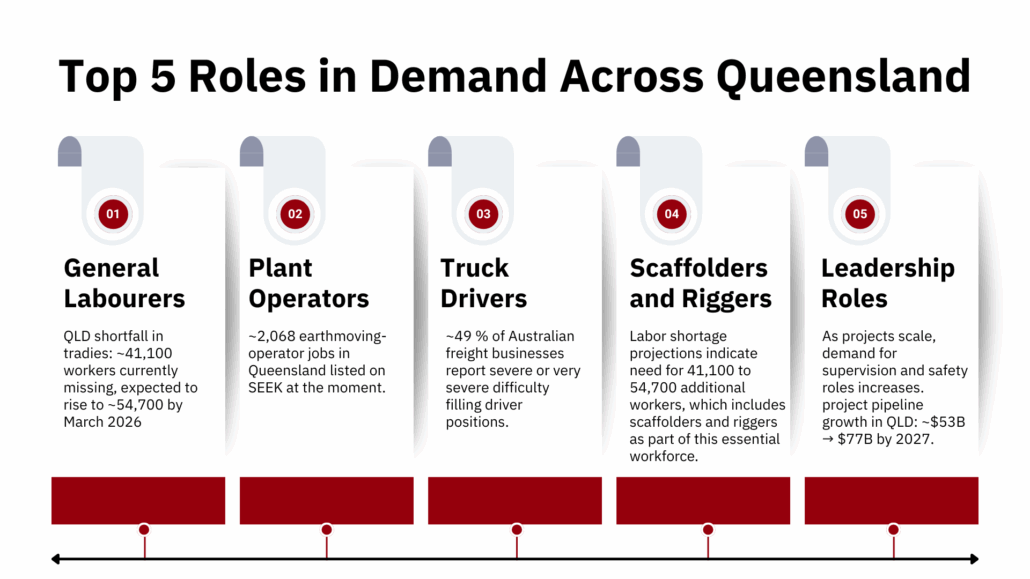
So, which roles are at the top of the list right now? Here are the five key areas driving demand across Queensland:
→ Labourers
→ Earthmoving Plant Operators
→ Truck Drivers
→ Scaffolders & Riggers
→ Leadership Roles (Supervisors, Site Leads, Safety Officers, Managers)
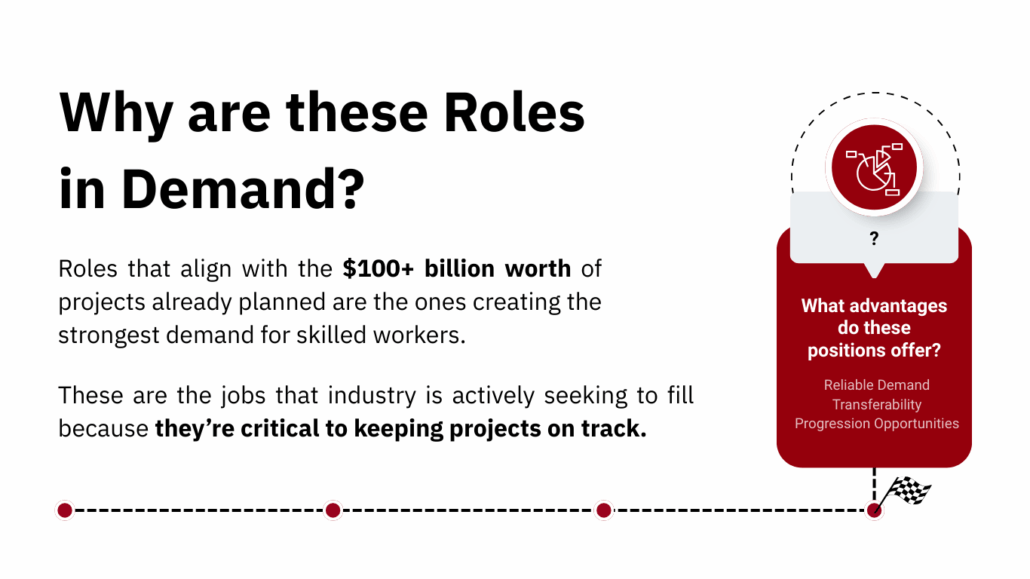
What makes them especially attractive is that many of these pathways offer:
- Reliable demand — skills that are consistently needed across projects.
- Transferability — licences and qualifications that open doors across industries like civil, mining, warehousing, and logistics.
- Progression opportunities — the ability to build on entry-level skills and move into higher-level or supervisory roles with further training.
For learners, that means choosing the right training pathway isn’t just about “getting qualified” — it’s about positioning yourself for industries where your skills are valued and future-focused.
Training Pathways for Queensland’s Top 5 In-Demand Roles
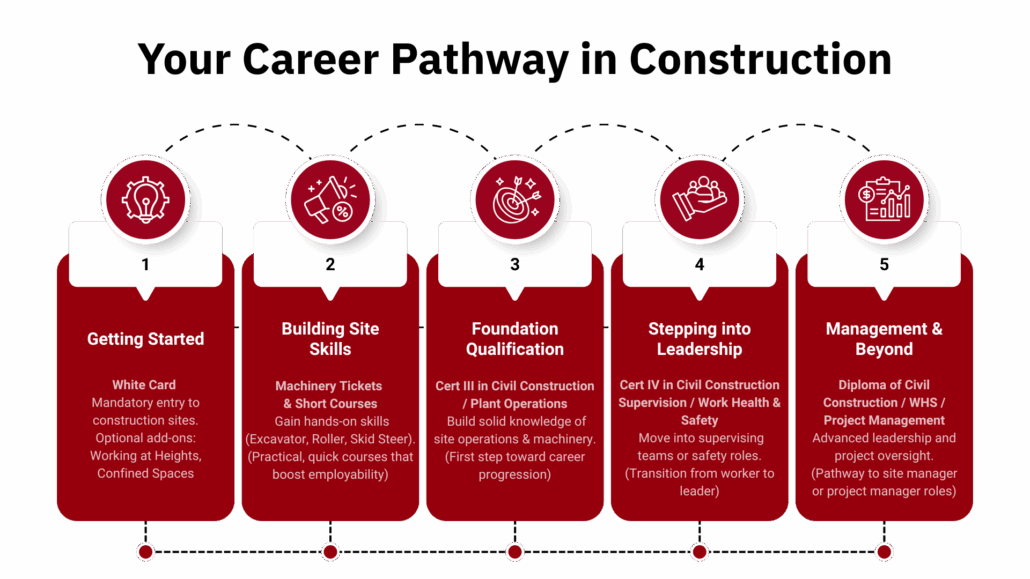
Every construction career starts somewhere. With the right training, you can progress from entry-level roles to site leadership and even project management.
Now let’s break down what makes each of these roles so important — and how the right training pathway with SDS can set you up to step into them.
Getting Started
If you want to start working in construction, the first step is non-negotiable: you need a White Card. It’s the mandatory industry entry requirement across Australia. Without it, you cannot legally enter or work on a construction site.
The White Card gives you the essential knowledge of workplace health and safety requirements, including how to recognise hazards, follow site procedures, and keep yourself and others safe. It’s a short course but it’s the gateway to every other opportunity in construction.
Once you’ve got your White Card, adding additional safety short courses can make you more confident and flexible on site. Courses like Working at Heights or Confined Spaces are often requested by employers because they demonstrate you’re prepared for specialised environments and aware of critical safety practices.
This combination is a great starter package for anyone looking to get into the construction industry, whether you’re brand new, re-entering the workforce, or changing careers.
Training Pathways with SDS:
- White Card → mandatory for construction work
- Working at Heights → short course
- Confined Spaces → short course
Educational Pathways for Each Role
1. Labourers (Entry-Level Roles You Can Start Now)
If you’re thinking about working on construction sites — concreting, civil works, general labour — there are definitely entry points that don’t require years of study. These are the kinds of skills and tickets that help you get started, be safer on-site, and add value as you build experience.
Training Pathways with SDS:
- White Card → this is mandatory for any person working on a construction site.
- Safety Short Courses → for example, Work Safely at Heights or Confined Spaces are useful add-ons for many sites.
- Machinery Tickets → things like Skid Steer, Excavator, Wheeled Front End Loader, Roller, Tractor tickets. These allow you to operate machinery safely and be more versatile on projects.
If you’re new to machinery operation (or have very limited experience), we recommend starting with the Roller or Skid Steer.
2. Earthmoving Plant Operators
From road upgrades to major infrastructure projects, operators are essential. Excavators, loaders, rollers, and skid steers keep worksites moving and are some of the most in-demand skills in civil and mining projects.
If you’re new to machinery operation (or have very limited experience), we recommend starting with the Roller or Skid Steer. These are excellent entry-level machines that give you the fundamentals of plant operation before moving into larger or more complex equipment like an Excavator or Loader.
Training Pathways with SDS:
- Roller Ticket → great for beginners
- Skid Steer Ticket → great for beginners
- Front End Loader Ticket
- Excavator Ticket
- Dozer Ticket
3. Truck Drivers (HR, HC, MC)
Queensland’s construction, logistics, and mining industries all depend on licensed truck drivers. From delivering materials to moving heavy equipment, trucks are the backbone of almost every major project in the state. With billions of dollars’ worth of projects already underway — and more planned in the lead-up to the 2032 Olympics — demand for licensed drivers is strong and consistent.
The type of licence you need depends on the vehicle and the job requirements. Each licence class builds on the one before, allowing you to progress into bigger vehicles and more opportunities.
If you’re new to heavy vehicles, the best place to start is usually a Medium Rigid (MR) or Heavy Rigid (HR) licence. These prepare you for roles in construction and logistics that require reliable transport of people, goods, or materials. Once you’ve built experience, you may choose to upgrade to a Heavy Combination (HC) or Multi-Combination (MC) licence, which open doors to higher-capacity vehicles used in mining, civil, and long-haul transport.
Training Pathways with SDS:
4. Scaffolders & Riggers
Every major construction site relies on scaffolding and rigging. These are the structures and systems that allow workers to build safely, move materials, and complete jobs at height. Without trained scaffolders and riggers, projects can’t progress efficiently or safely — which is why they are always in demand.
Because these are high-risk licences, they also carry a lot of responsibility. Workers in these roles are trusted to make sure people and equipment are supported properly, so safety and compliance are a big focus during training and on-site.
If you’re new to construction or have limited experience, a Dogging licence is often the best place to start. Dogging covers the safe slinging of loads and directing crane operators — skills that form the foundation of rigging and scaffolding work. From there, you can progress into Rigging or Scaffolding, which open up more specialised and higher-responsibility pathways.
Training Pathways with SDS:
- Dogging → recommended starting point for new entrants.
- Rigging → for those wanting to move into load handling, lifts, and structures.
- Scaffolding → for safe assembly, alteration, and dismantling of scaffolding systems.Scaffolding
5. Leadership Pathways (Supervisors, Site Leads, Safety Officers, Managers)
Every construction project, no matter the size, needs people who can take responsibility for safety, compliance, and coordination. As Queensland’s projects grow larger and more complex, the demand for trained supervisors and safety officers is increasing.
These roles aren’t just about “managing people” — they’re about ensuring work is carried out safely, that regulations are followed, and that teams have the structure they need to deliver projects on time. Supervisors and safety officers are the link between the hands-on workforce and project management, making them critical to the success of every build.
For those already working in construction or civil works, stepping into a supervisory or safety role is often the next natural career progression. It usually means more responsibility and a broader skill set, but it can also provide greater stability and long-term career development opportunities.
If you’re just starting out, these roles may not be immediate, but they are something you can work towards over time. Beginning with entry-level tickets or a Cert III qualification, you can gradually build the knowledge and experience needed to move into leadership, safety, or project management roles.
Training Progression Pathway with SDS
- Cert III in Civil Construction / Plant Operations → a strong foundation for understanding site operations and equipment use.
- Cert IV in Civil Construction Supervision → designed for those moving into supervisory positions, focusing on managing teams and site activities.
- Cert IV in Work Health & Safety → supports those aiming for safety officer roles, ensuring compliance with WHS legislation.
- Diploma of Civil Construction → progression into higher-level site management, contract management, and operational leadership.
- Diploma of Work Health & Safety → advanced training for WHS professionals managing compliance across multiple projects or larger organisations.
- Diploma of Project Management → ideal for those seeking broader project oversight roles, managing timelines, budgets, and stakeholders.
Turning Pathways into Progress
Every construction career looks different, but the pathway forward often follows the same rhythm: start with entry-level requirements, build hands-on skills, and then progress into qualifications that lead to supervision or management.
The roles we’ve outlined here are already in demand across Queensland’s projects — and with billions in infrastructure investment through to 2032, the demand isn’t slowing down. The question is: where do you want your training to take you?
If you’re ready to explore what your next step could look like, Download the Horizon 2032 Career Pathway Guide to see how Queensland’s projects connect to training opportunities.
Or, if you’d prefer to talk it through → Let’s Talk Pathways
Your next step doesn’t need to be complicated — it just needs to get you moving forward. And SDS Training is here to guide you at every stage.
Next Step: Why Training Now Matters
Opportunities are growing, but timing is everything. Learn why training sooner gives you the advantage in securing long-term career success during Queensland’s Golden Decade.


